
Project Dragonfly
2018 - 2020
Although development the rocket Dragonfly was a huge part of DanSTAR, the actual Dragonfly project was larger than the rocket itself. Within the project, we developed a new engine, new flight electronics, updated our mission control software, the test stand, and much more.

The Rocket
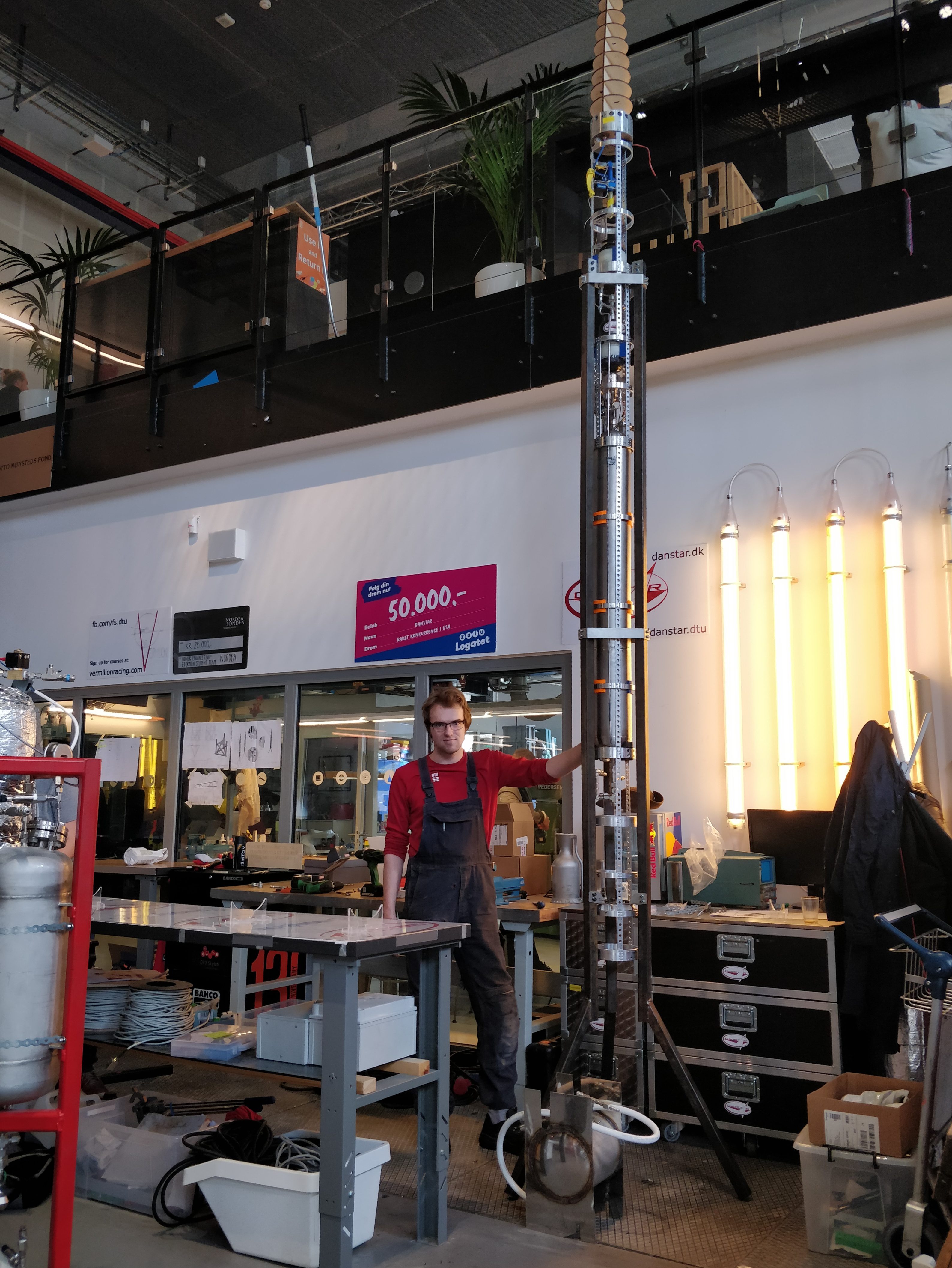
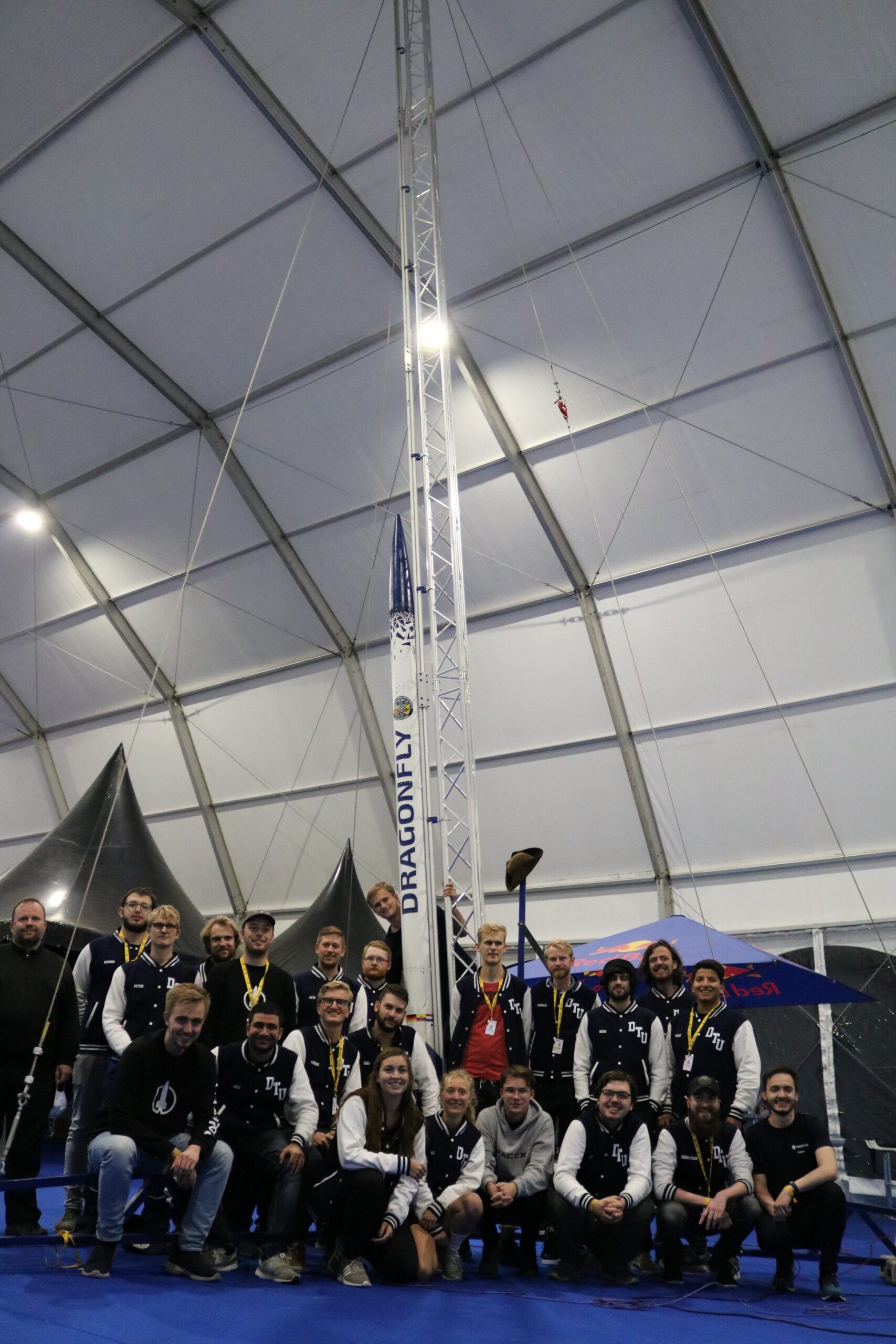
The Dragonfly rocket was 4.5 meters long and consisted of an aluminum air frame with a carbon and glass fiber exterior. Weighing in with a dry weight of approximately 50 kg, the entire rocket was extremely light-weight, allowing it to reach the desired altitude of approximately 9 km.
Upon reaching its apogee, the nose cone ejected using pressurised CO2 which let the drogue chute fall out of the nose cone volume. After falling to around 500 m above ground level, a pin was released which allowed the drogue chute to deploy the main parachute. This event reduced the falling velocity of the rocket to 20 km/h.
The rocket was powered with a bi-liquid propulsion system running on nitrous oxide and a custom isopropyl alcohol blend. These propellants are fed to the rocket engine 'Gnome Child' using a 300 bar pressure-regulated cold gas inert feed system of pure dinitrogen. The propellant tank itself was a common bulkhead duplex/316 stainless steel component, which had been carefully engineered and pressure-tested to withstand immense pressures above 50 bar if necessary during operation.
The rocket was passively guided with three aluminum fins. The decision to passively guide the rocket was made to reduce complexity and the working load on an already burdened electronics and software team as an active guidance system would otherwise have had to be developed. This necessitated a high exit velocity when leaving the launch rail, which required a high start acceleration that then imposes another series of challenges we had to solve.
The Engine
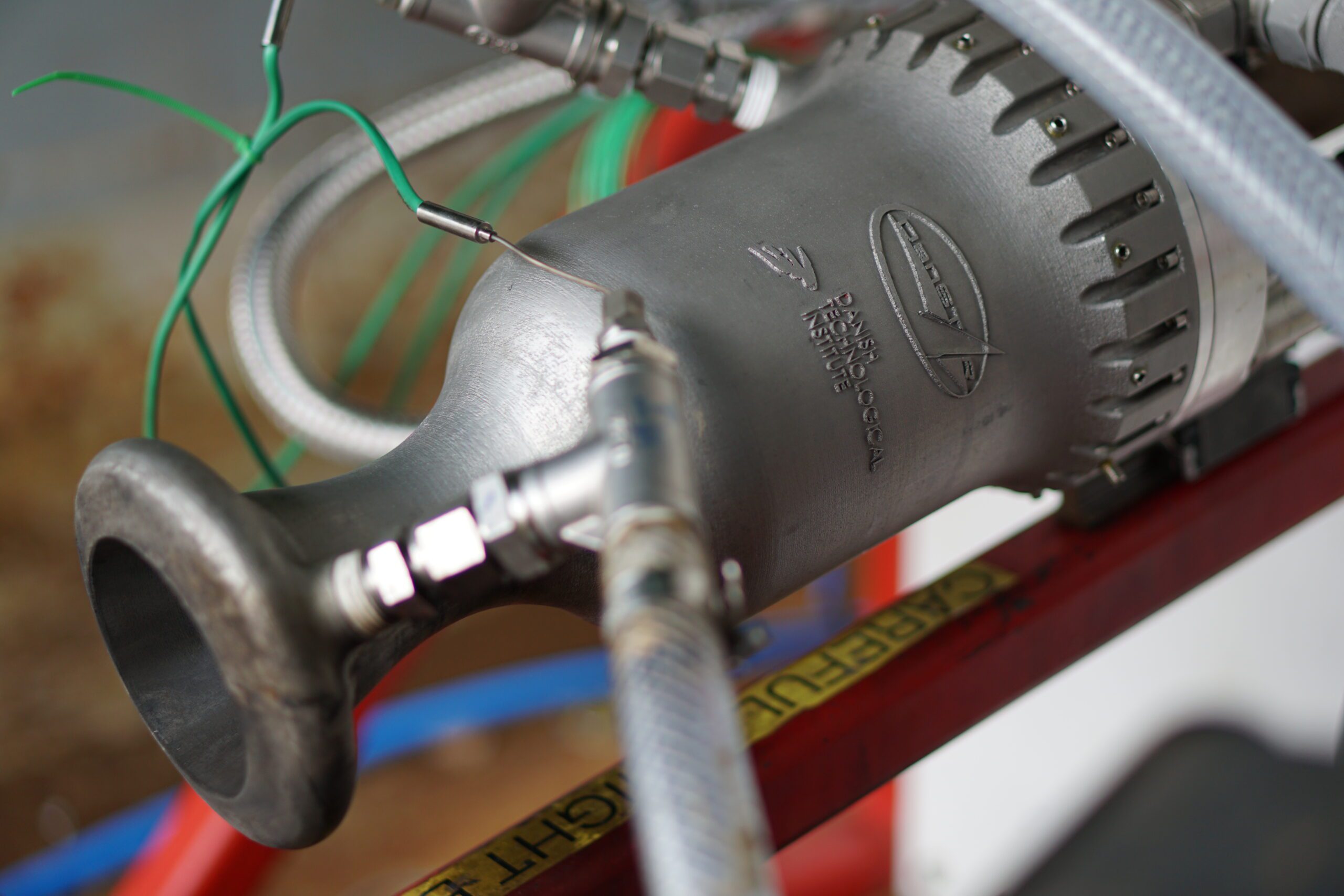
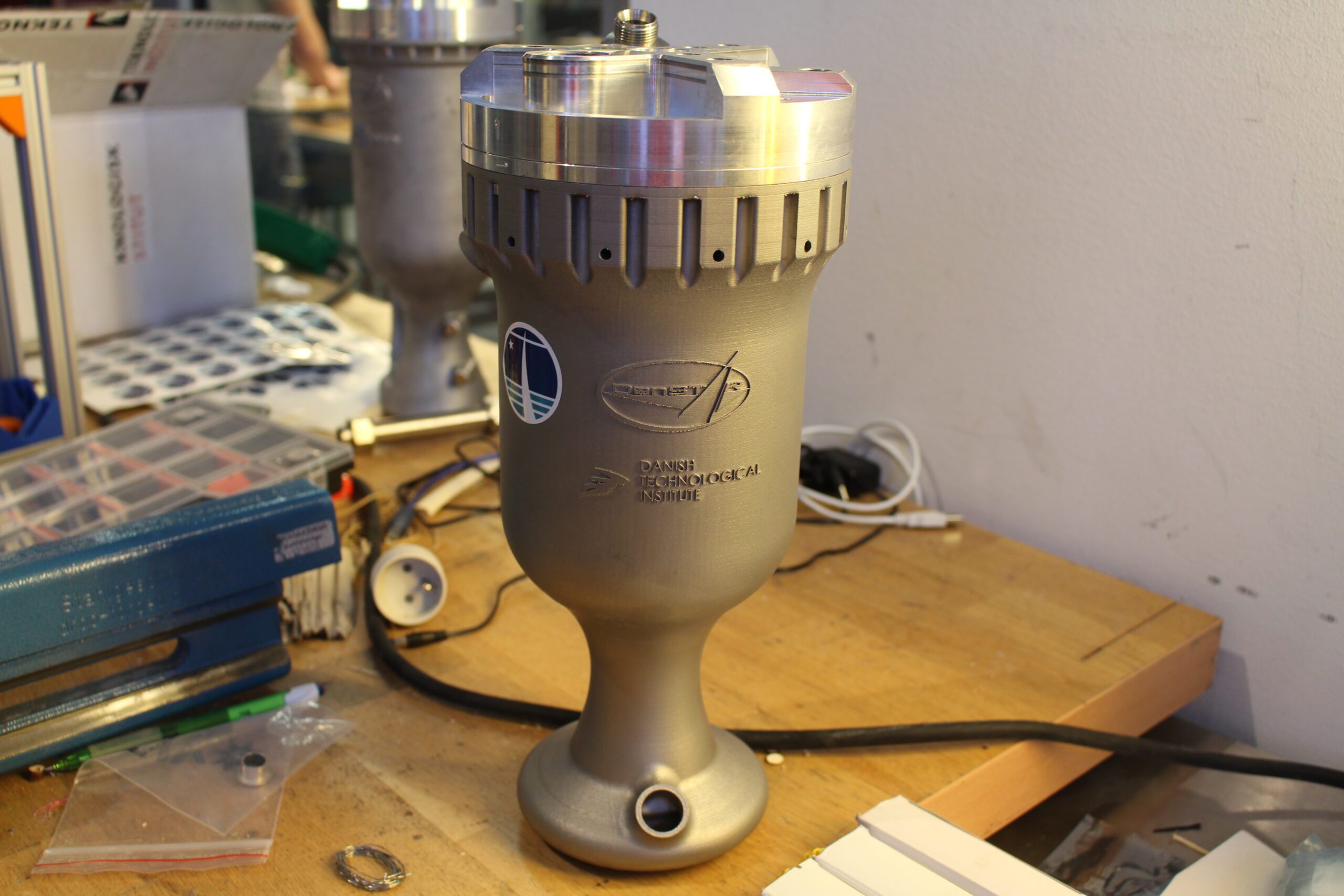
Gnome Child is the name of the rocket engine that propelled Dragonfly upwards for the approximately 16 second long boost phase. During this period, the rocket saw an acceleration of more than 3G as the fuel tanks emptied. Around 18 kg of pure propellant was burnt in this period.
The engine was kept cool with an advanced regenerative cooling system, meaning all of the fuel is circulated around the combustion chamber immediately before being injected into the engine. This has a two-fold advantage in that the engine is kept cool, but the fuel is also heated up, reducing the energy needed for evaporation.
This was, and still is, done in close cooperation with Danish Technological Institute who gracefully offered us the opportunity to 3D print the engine out of metal. 3D printing is a new and emerging technology within rocketry that allows for complex designs of cooling systems within the actual engine itself that could not be manufactured with traditional methods. This means DanSTAR is on the forefront within actual rocketry development, and it allows our students to get hands-on experience with state-of-the-art technology before graduating.
RICHARD
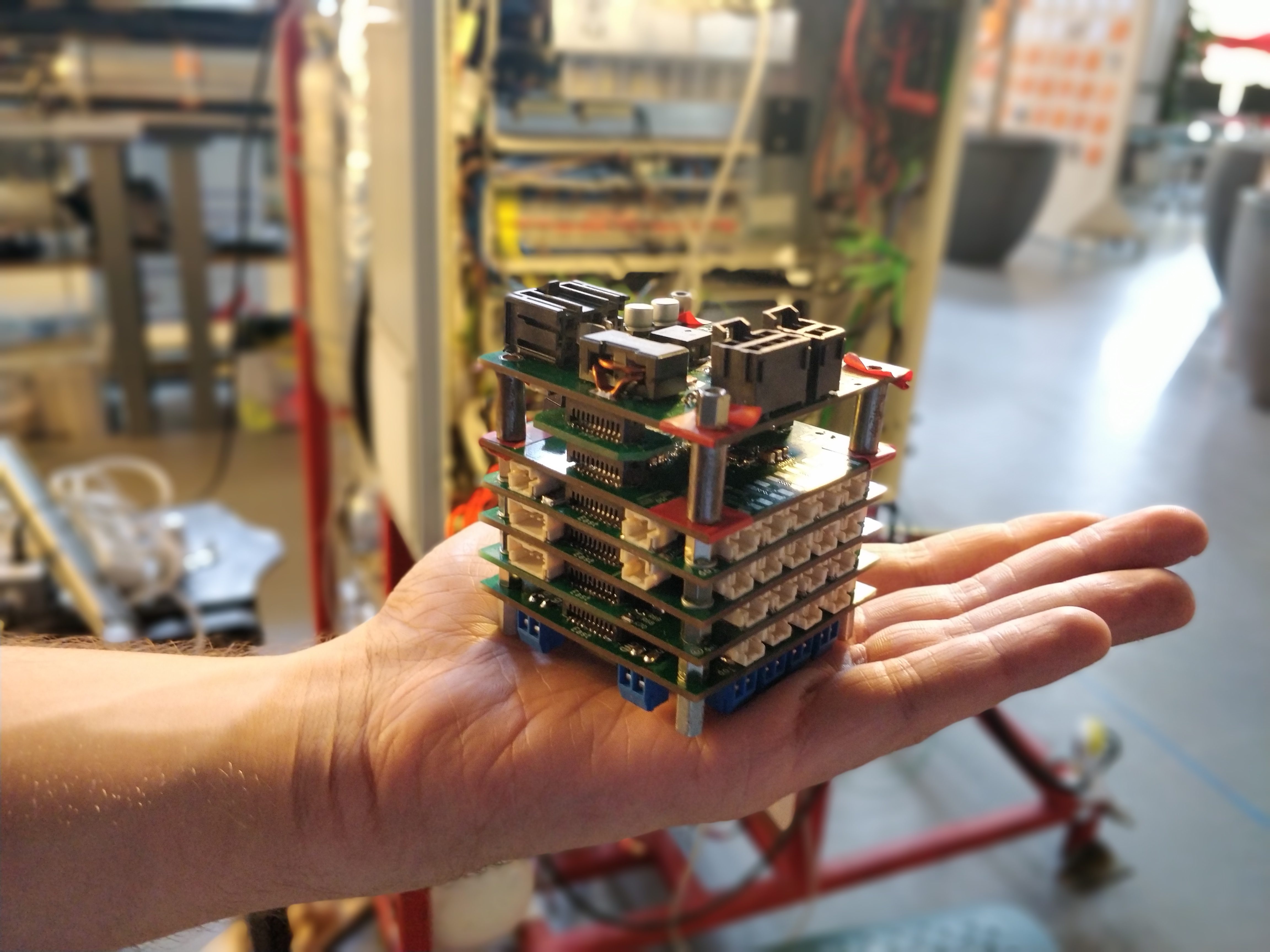
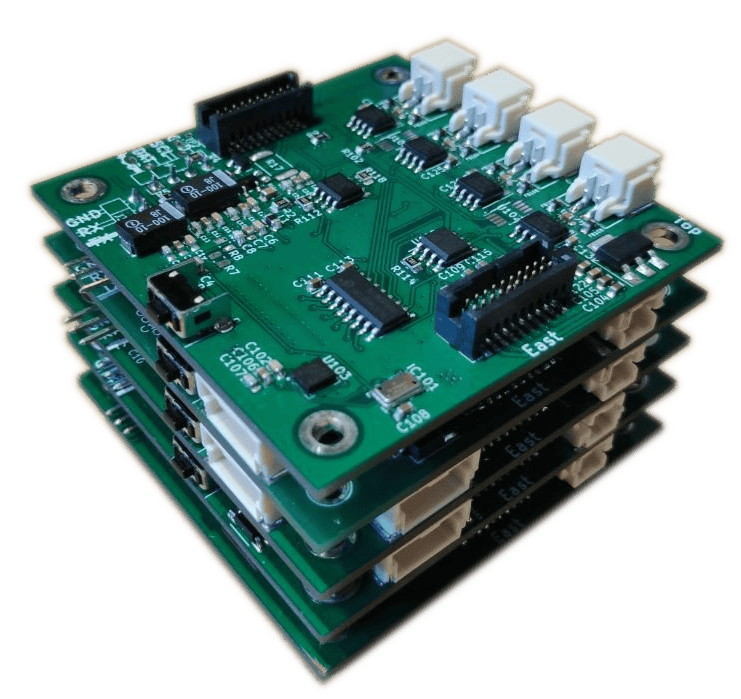
RICHARD is short for Robust Internal Controller for High Altitude Rocket Dragonfly. This was our internal flight computer, which additionally also controlled the test stand. Sometimes refered to as the flight stack for its many stacked PCBs, it utilised STM32 microcontrollers for a low learning curve and reliable platform to work with. The stacked PCB design allowed for easy iterations of individual computer models and made adding new features a breeze.
The internal communication was done with a modern CAN interface, the same also used in the automotive industry, which allowed the boards to communicate quickly and easily among each other, ensuring information was where it was needed when it was needed.
The multi-board design consisted of an actuator board, temperature sensor board, pressure sensor board, telemetry board, high-power board, low-power board, and lastly the main board. This configuration had all the functionality that was needed within Dragonfly during flight and recovery, and controlled everything from the auto-ignition sequence to recovery events.
When used on the test stand, a test stand board was added to the stack, which increased the amount of connected sensors and valves that could be controlled.
The Launch Rail
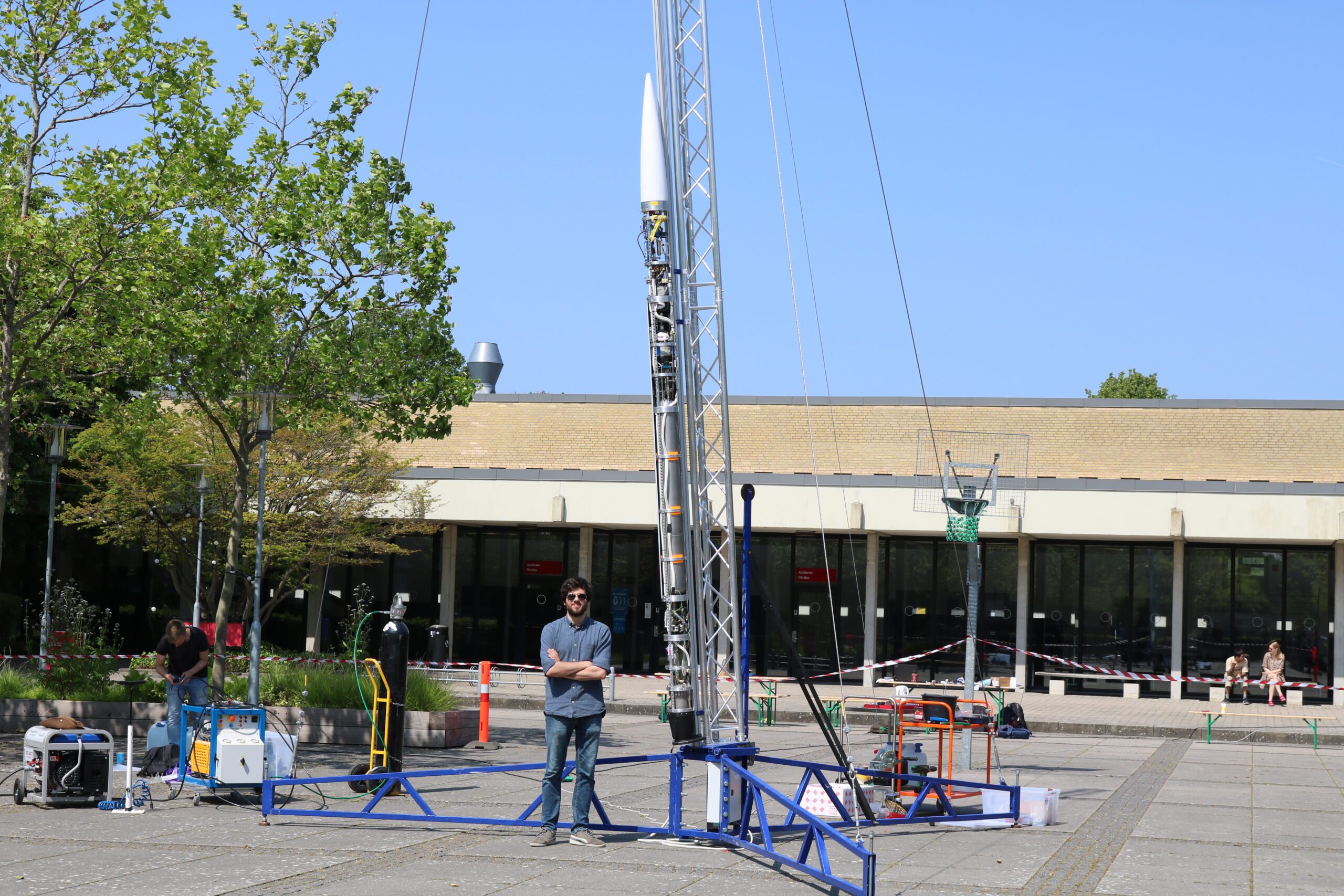
The launch rail is a quarter ton heavy and 13 meter tall, behemoth structure that DanSTAR had to develop from scratch to facilitate launching a rocket the size of Dragonfly. The launch inclination can be adjusted down to a single degree because of its special hinge construction. This means DanSTAR can carefully decide the rocket flight direction, which is helpful for safer launch events.
The structure itself consists of a steel center piece and legs with an aluminum mast. This ensures most of the weight is located at the bottom of the structure, making it stable even in windy conditions. The mast is in constant tension because of the steel wires which keep it firmly in place when the launch rail is deployed.
The launch rail is able to be completely disassembled, which is a requirement for shipping it to the US, in order to distribute the shipping weight throughout several flight cases.
The European Rocketry Competition's launch rails were derived from DanSTAR's original design and as a nod to the association, each launch rail contains DanSTAR's name and logo.
Launch
Dragonfly launched at EuRoC '20 and became DanSTAR's first successful rocket launch just four years after the association began.
Presently, the Dragonfly rocket hangs from the ceiling of DTU Skylab.