
Project Valkyrie
2021
Project Valkyrie was DanSTAR's next step toward new heights, quite literally. DanSTARs goal with the rocket Valkyrie was to beat the world record for height reached by a student built bi-liquid rocket.
The project itself included an upgrade of our electronics, software, building the Valkyrie rocket, upgrading our test stand and upgrading our launch rail.

The Rocket
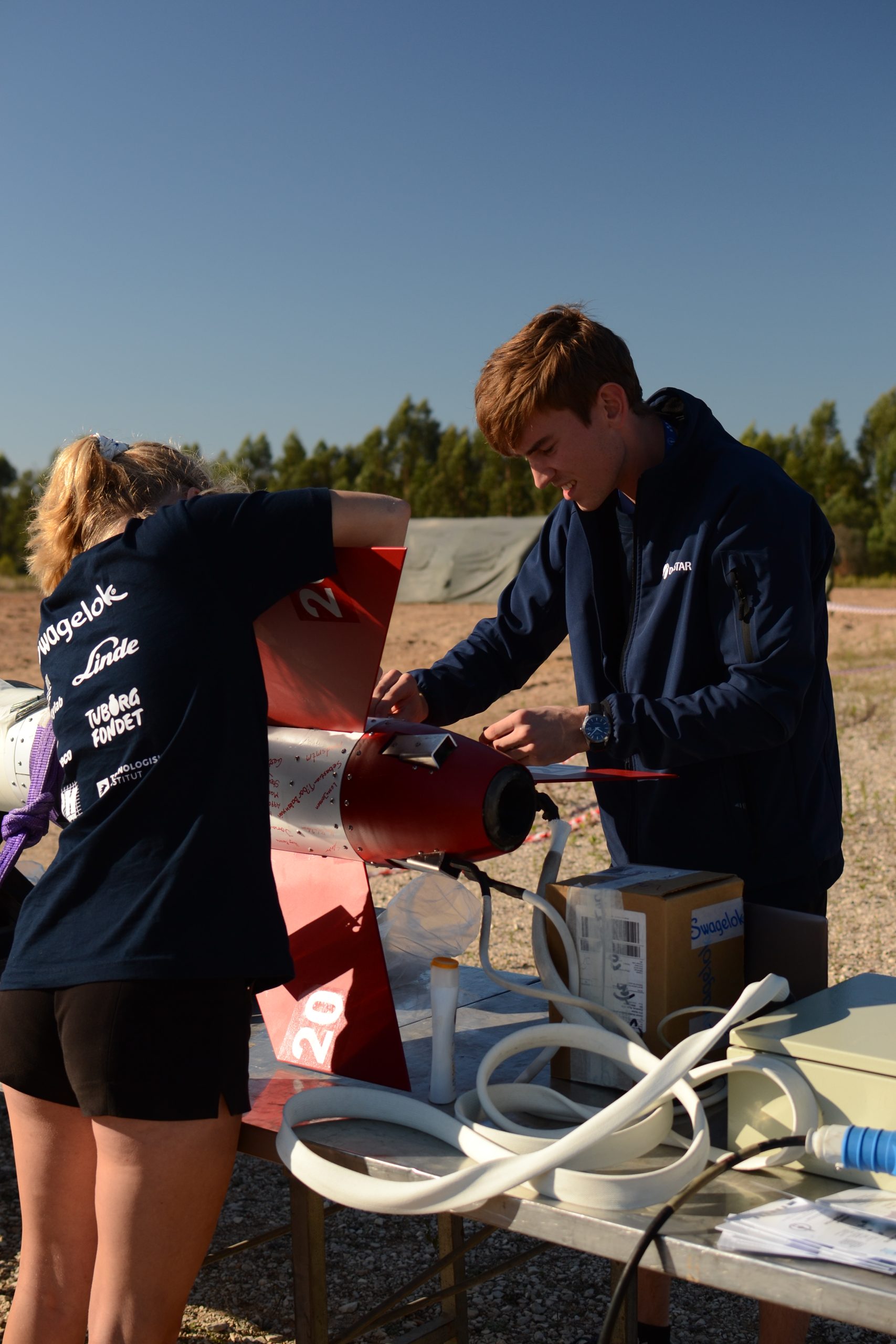
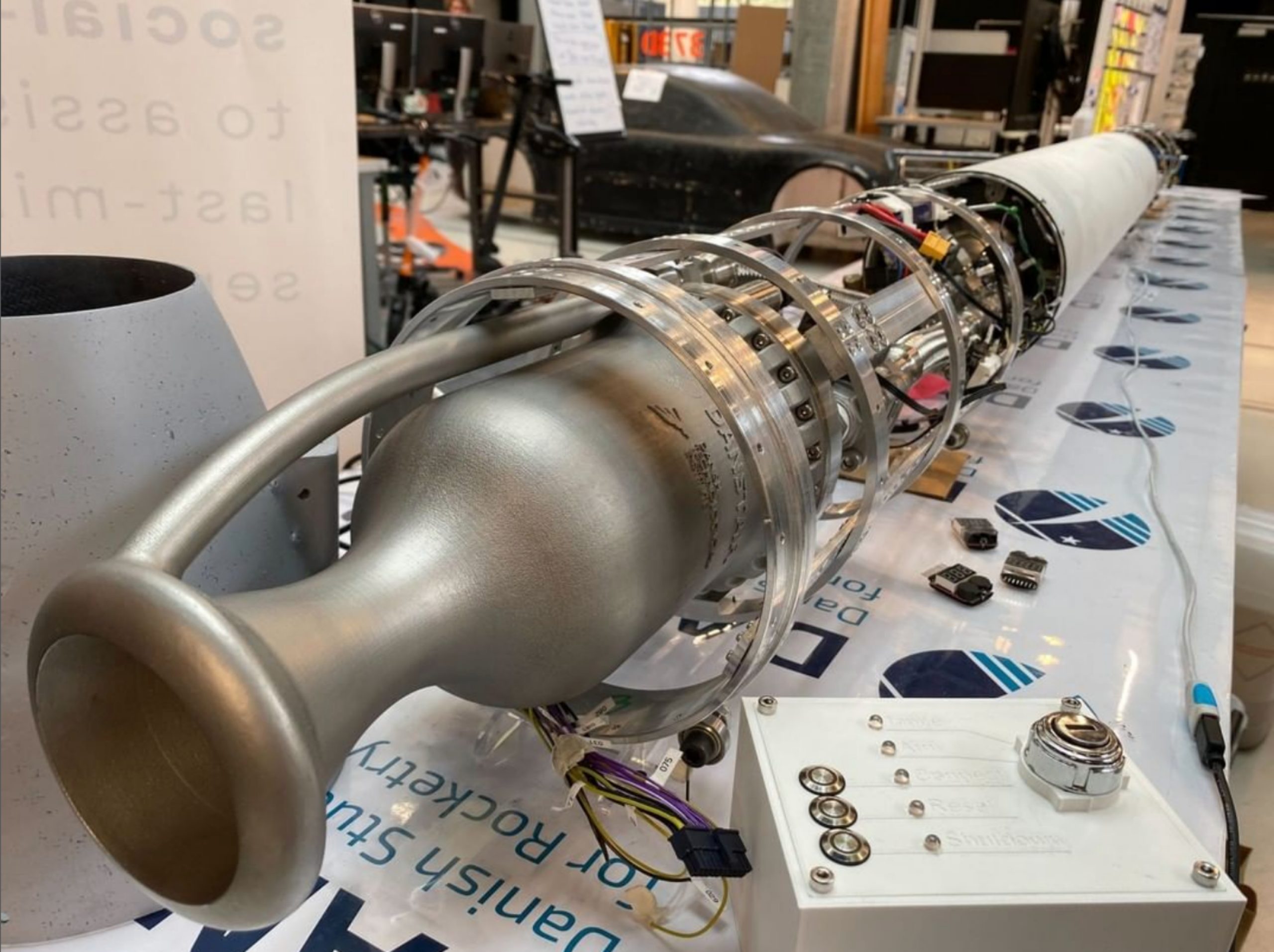
The Valkyrie rocket was an improved rocket, based closely on the design of the Dragonfly. Valkyrie had a length of 4.6 meters, from the bottom of the engine nozzle to the tip of the nose cone. It was constructed using a frame of aluminium bands and rails, all covered in 1 mm thick panels of carbon and glass fibre. It had an outside diameter of 202 mm, giving it a length/diameter ratio of about 22.8. It had a dry weight of about 54 kg, but sat on the launch rail fully loaded with a total wet mass of about 77 kg.
After reaching the desired apogee of 9,144 m, the recovery system of Valkyrie kicked in: First, a set of two redundant CO2 capsules burst, ejecting the nose cone and a drogue chute, slowing and stabilising the descent of the rocket. Just before landing, at an altitude of about 500 m, the main chute was to be deployed using an electronically controlled servo and slows Valkyrie down for a gentle touchdown – ready for reuse!
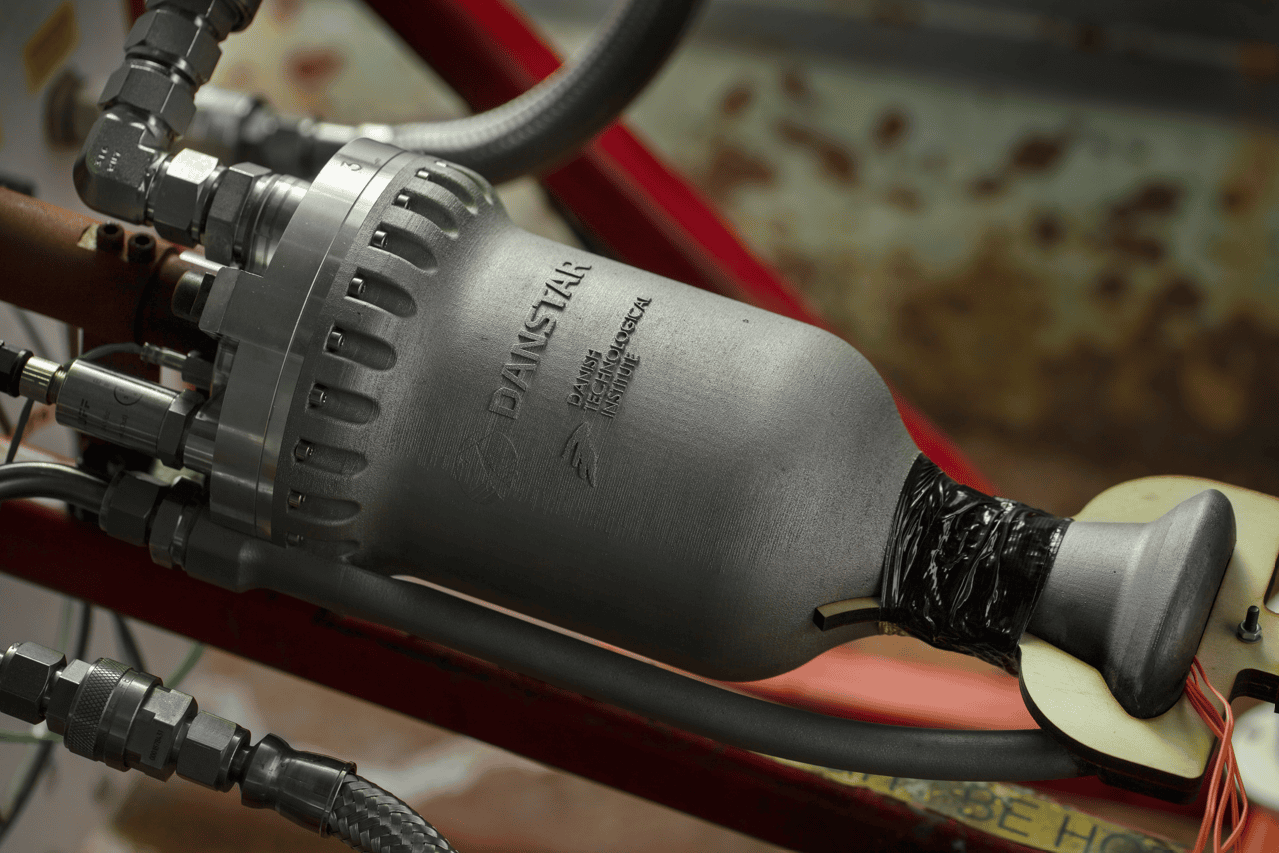
The rocket was propelled by a new and improved version of our student designed 3D-printed steel engine, Gnome Child. The regeneratively cooled engine ran on a mix of isopropyl alcohol and nitrous oxide. The engine was pressure fed using a high-pressure nitrogen system, used to pressurise our custom-made duplex/316L stainless steel common bulkhead propellant tank.

Gnome Child Mk IV
Valkyrie used the fourth iteration of DanSTAR’s Gnome Child bi-liquid rocket engine as its propulsion unit. Like its predecessors, Gnome Child Mk IV used nitrous oxide and a custom isopropanol fuel blend, and produced 3.1 kN of thrust at a chamber pressure of 19 bar with a specific impulse of 195 seconds. This put it at the forefront of efficiency among student rocket engines, and to our knowledge was the only flight-proven student-developed liquid engine in all of Europe at the time of launch.
After the successful launch of Dragonfly in 2020, the engine underwent several design improvements, saving 1.5 kg of mass and reducing the pressure drop in the cooling channels. Due to its regenerative cooling system and well-tested injector design, the engine achieved an extremely high combustion efficiency during operations. Gnome Child Mk IV was the culmination of three years of engineering, designing and testing, and is still a testimony to DanSTAR’s ambitiousness and dedication.
The Rack
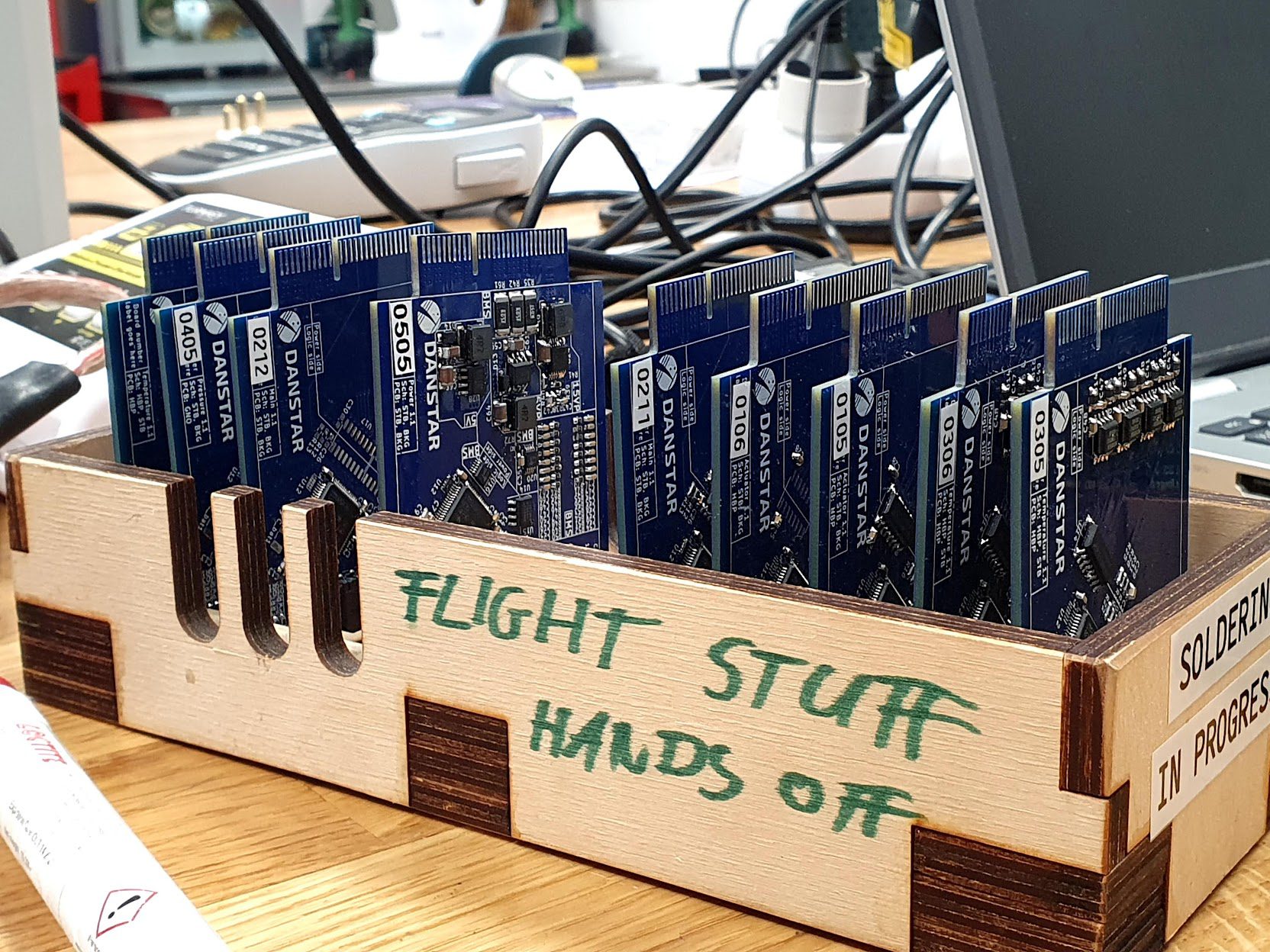
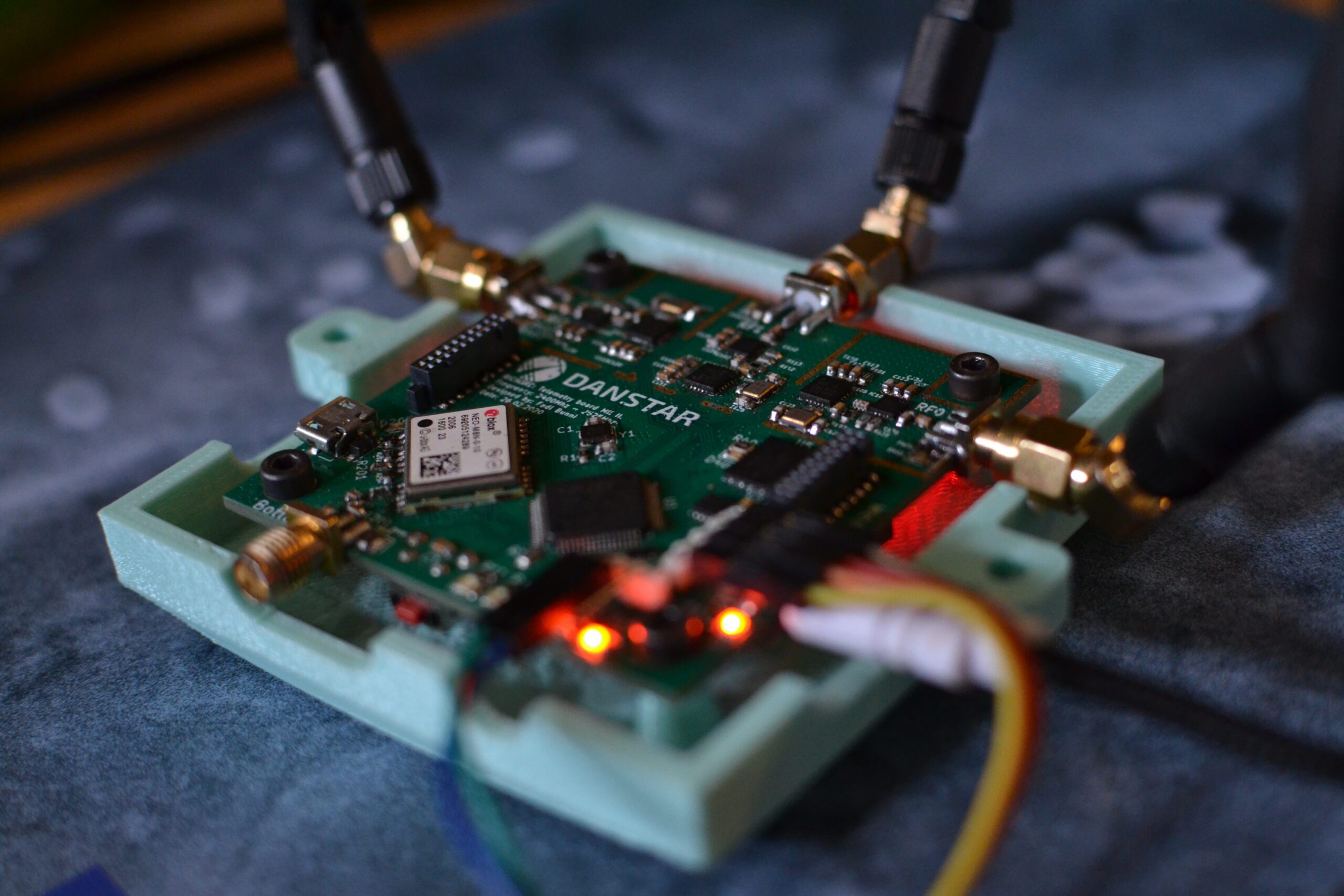
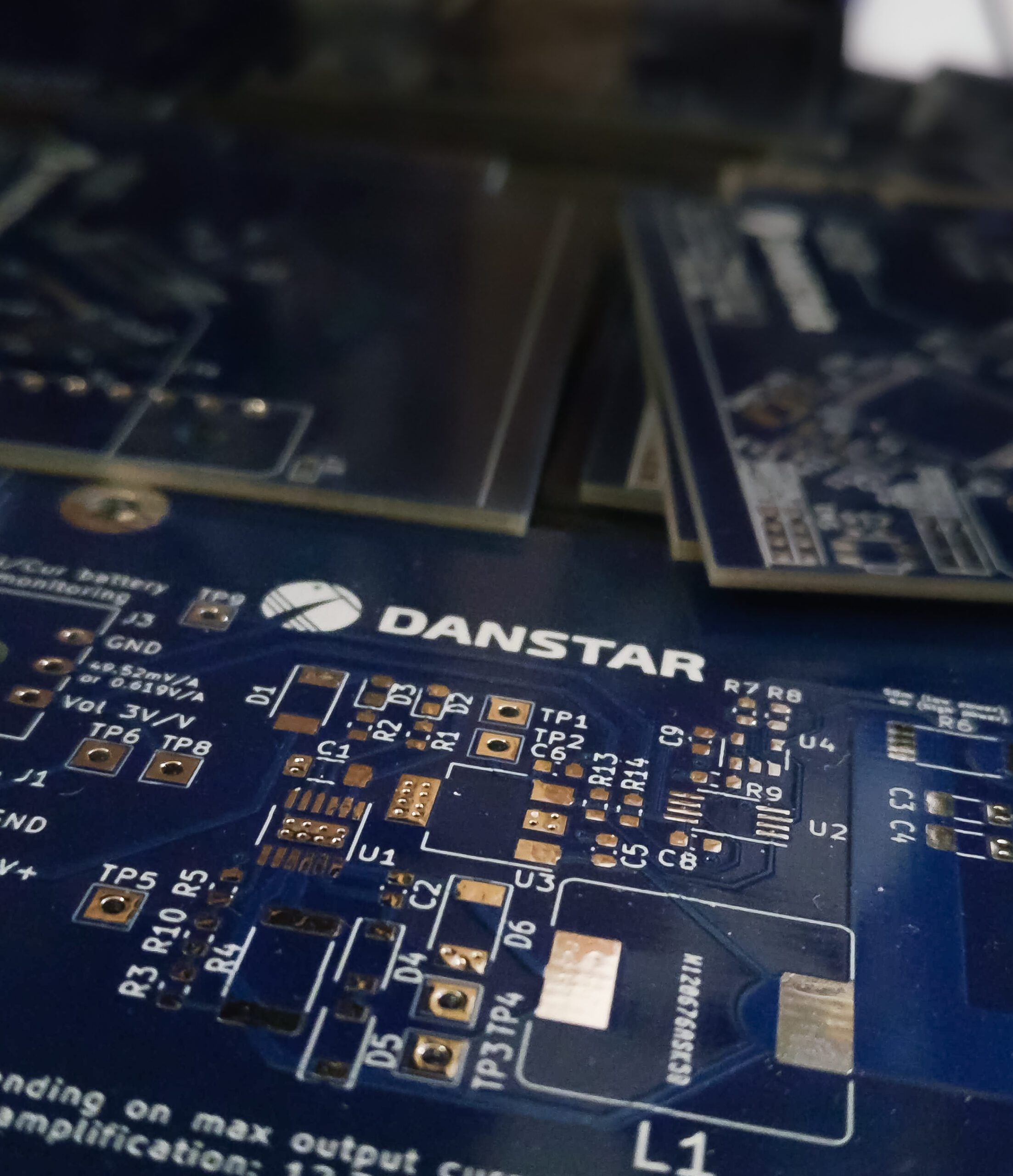
The Rack was the flight computer that controlled the Valkyrie rocket. It was the successor to the Stack, which was used in the Dragonfly rocket. While the Stack consisted of seven unique PCB boards stacked on top of each other, the Rack consisted of six unique PCB boards which were slotted into a backplane PCB, in much the same way RAM is slotted into a motherboard on a computer.
This slotting system allowed for boards to be independently added, removed, iterated, replaced, and tested easily throughout the entire design process of the Valkyrie rocket.
Each PCB in the Rack had a unique purpose, including controlling the flow of propellants with servo motors, measuring pressures and temperatures in the engine, and wirelessly communicating with Mission Control via on-board antennas.
Each of the six PCBs was equipped with STM32 microcontrollers, all of which communicated with each other using CAN-FD protocol, a protocol used in modern high-performance vehicles. This ensured that data and information about the rocket was gathered, stored, and transmitted to where it needed to be at all times before, during, and after the flight. Many of the Rack boards were also controlling other peripheral PCBs in the rocket which were not a part of the flight computer; the Actuator board was controlling three different Servo boards, the Main board controlled the Ignition board, and the Power Supply board monitored four different Battery boards.
The Rack was designed and programmed entirely by DanSTAR’s electronics and embedded software teams, making every aspect of it specialized for the operation of the Valkyrie rocket.
Launch
Valkyrie was launched at EuRoC '21 and reached an apogee of 6,545m. This broke the world record for altitude achieved by a student-built bi-liquid rocket.